
The Hidden Risk for Contractors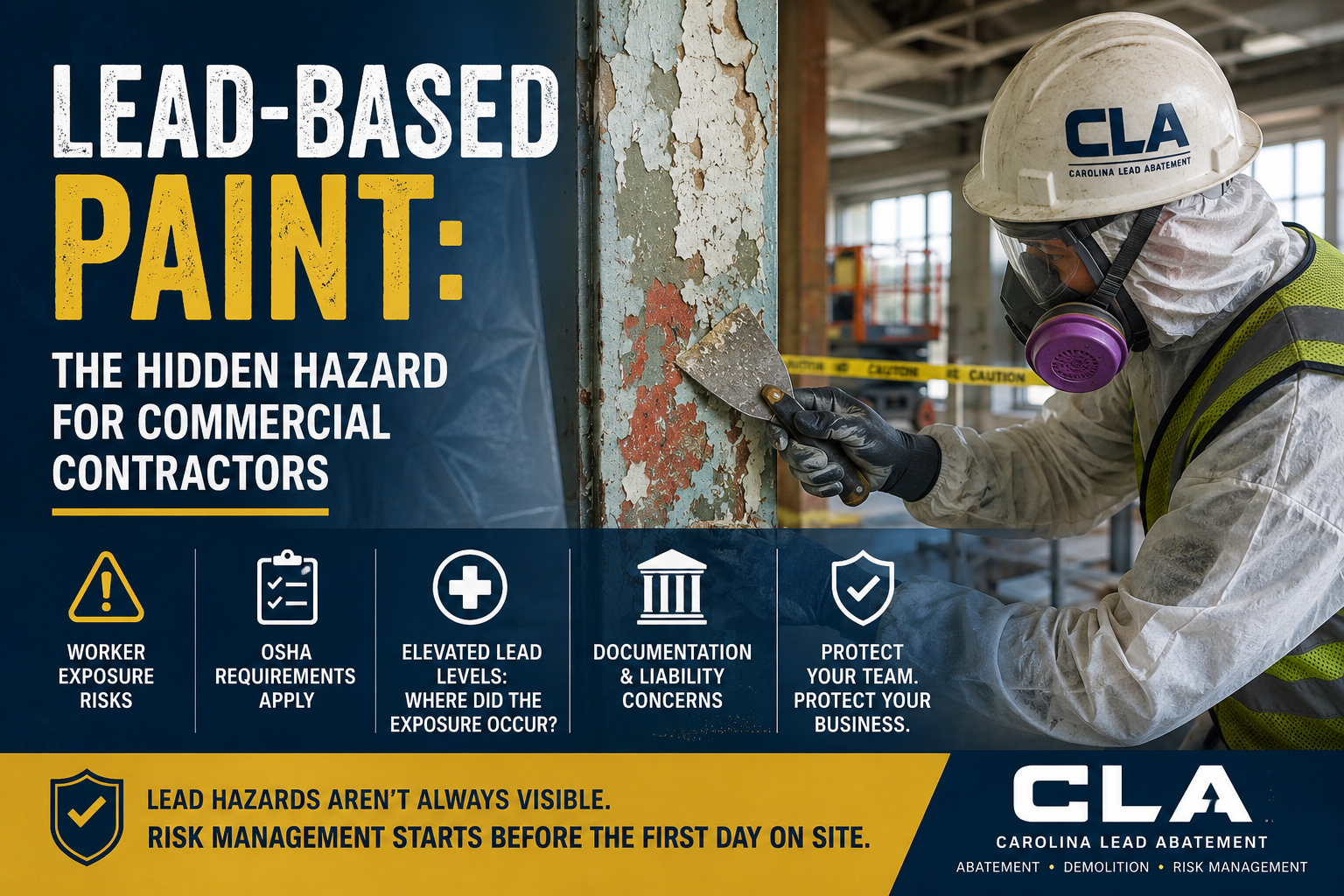
One of the biggest risks associated with disturbing lead-based paint isn’t simply the presence of lead itself—it’s the question that follows if a worker later develops elevated blood lead levels.
Where did the exposure occur?
Was the employee exposed while performing work activities?
Was the exposure the result of hobbies, recreational shooting, home renovations, or other off-the-job activities?
How can anyone prove where the exposure originated?
Once lead exposure becomes a concern, documentation, training records, exposure monitoring, work practices, and medical surveillance can become critically important.
For contractors, owners, and employers, those questions can quickly become complicated and expensive.
Why Many Owners Choose a Professional Lead Contractor
Professional lead abatement contractors specialize in identifying lead hazards, implementing proper controls, documenting work activities, and performing projects in accordance with applicable regulations and industry best practices.
Using qualified professionals can help:
- Reduce worker exposure risks
- Protect occupants and building users
- Improve project documentation
- Reduce liability concerns
- Prevent unexpected project delays
Lead hazards are often manageable when they are identified and addressed properly. The challenge is not simply removing the material—it’s understanding the regulatory, health, and liability implications that can follow if they are not handled correctly.